The Local Group
The universe is made up of a very large number of galaxies similar to our Milky Way. I like the expression "Universe Island" defined by the German philosopher Immanuel Kant in the mid-18th century. Observing distant galaxies allows us to observe, as it were, “Universes”, made up on average of hundreds of billions of stars and planets. Galaxies group together in groups, like an archipelago of “island Universes”.
Let's leave our "Island Universe" to discover the galaxies that make up our "Local Group of Galaxies"
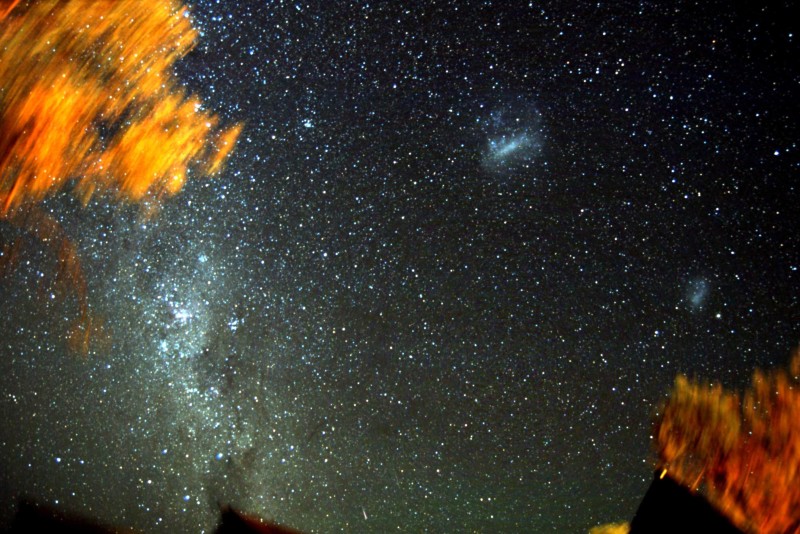
You have to go to the southern hemisphere to easily see the two galaxies closest to us in the sky. They are irregular (they look like an immense cluster of stars made up of a few gas nebulae). Appearing like two small misty clouds, they were named in homage to the Portuguese navigator, Ferdinand Magellan (entrepreneur of the first circumnavigation of the world).
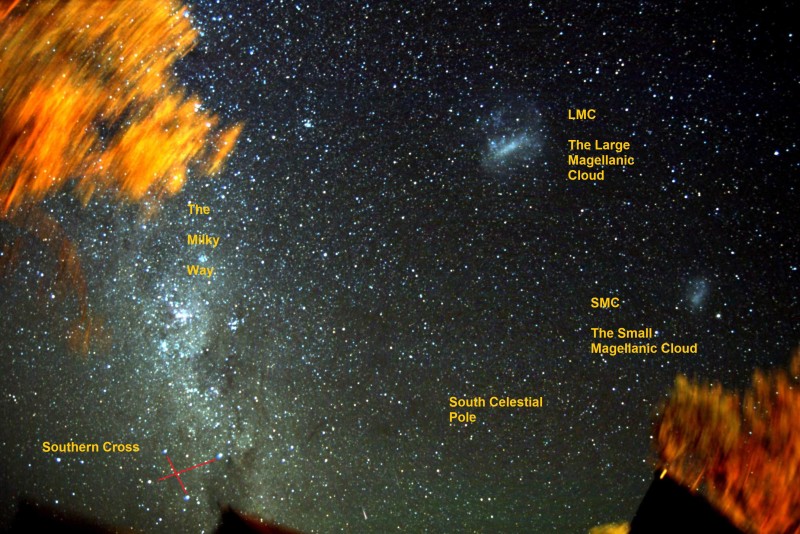
- The Large Magellanic Cloud is 26,000 light years across and 170,000 ly distant.
- The Small Magellanic Cloud is 16,000 ly wide and 205,000 ly distant.
These are dwarf galaxies, located on the outskirts of the Milky Way. In the photograph (composition of around thirty 20-second shots at ISO 1600, with a Canon 350D on a tripod, 17mm F/D2.8 lens at Uluru, Australia), we can also see the Southern Cross and next to it, a dark nebula called the "Coalsack".
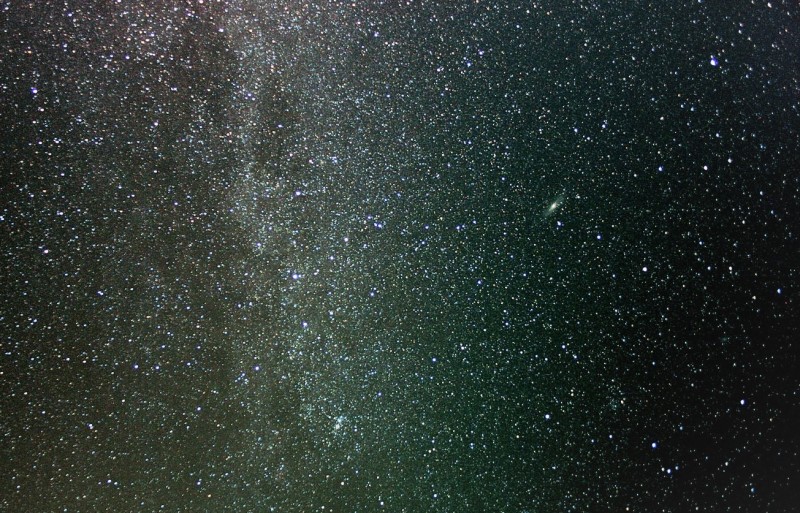
In the northern hemisphere, in the constellation of Andromeda, there is cloudiness which is discernible with the naked eye (if and even if the quality of the sky allows it, which is not the case in the city). Its observation on photographic plates, with the Hookes telescope 2.5 meters in diameter, allowed Edwin Hubble in 1924 to reveal the true nature of "spiral nebulae" by locating them well beyond the Milky Way. The historic "Great Andromeda Nebula" is now called the Andromeda Galaxy. It is the most distant celestial object observable with the naked eye, located 2.5 million light years from us.
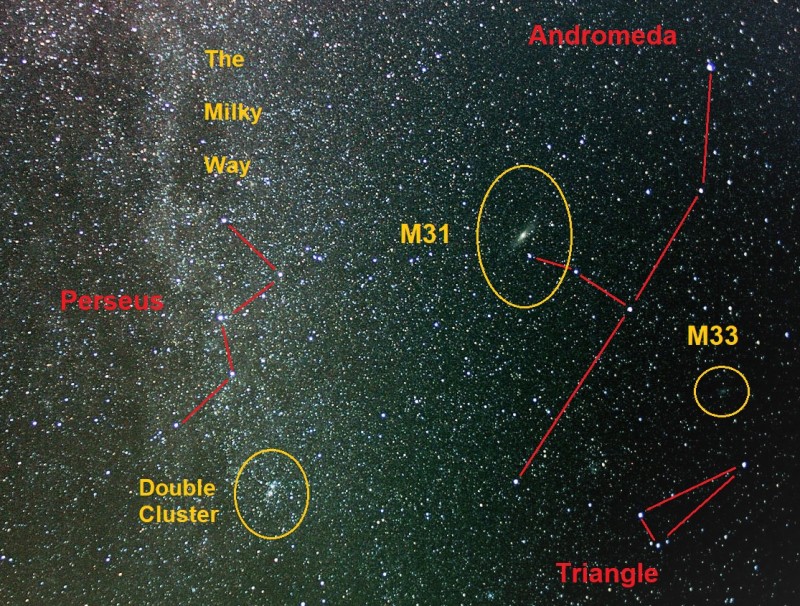
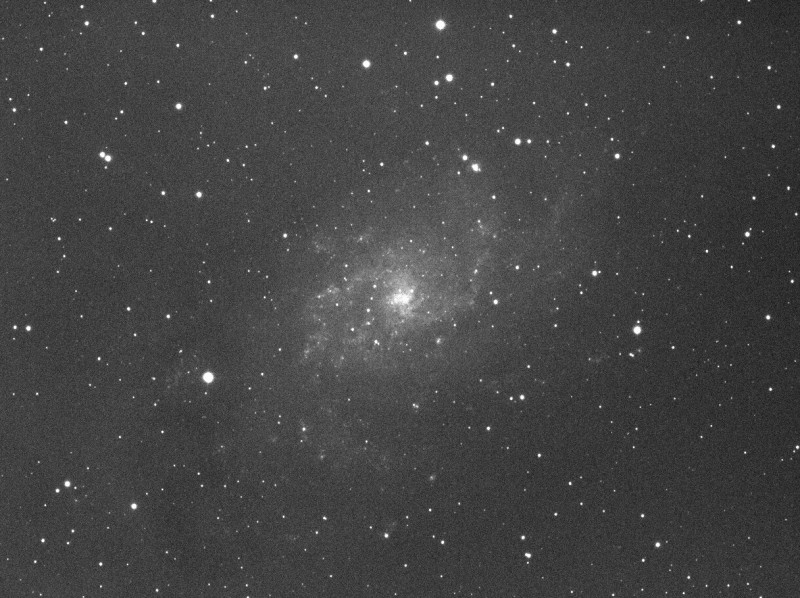
Spiral type Sb, M31 is the largest galaxy of the Local Group, the third largest galaxy is M33 of the small constellation Triangulum. M31 is approaching the Milky Way at a speed of 120Km/s to join it in four billion years and interact in the future formation of a single large galaxy. M31 is one of the few galaxies that comes closer to us because of the relatively close gravitational pull that outweighs the overall expansion of the space of the Universe.
 |
|
.jpg)