Daily life - Education
D.M.Chanchana sarangi from rambuka - Buddhist religious cities in sri lanka
About me
My village
My country
Buddhist religious cities in sri lanka
Articles
My Queen
My hero
My favourite movie
My favourite country
𝐋𝐮𝐥𝐮 𝐓𝐞𝐚𝐜𝐡𝐞𝐫


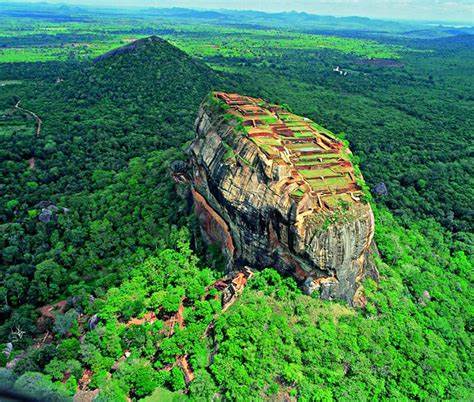
SIGIRIYA

Sigiriya is an ancient kigdom.
It was built on a huge rock.
King Kashyapa built it.
It is located near the town of Dambulla.
We can see fresoes and the mirrorwall.
Sigiriya is a world heritage site.
There beautiful water gardens too.
We must protect this historical place.
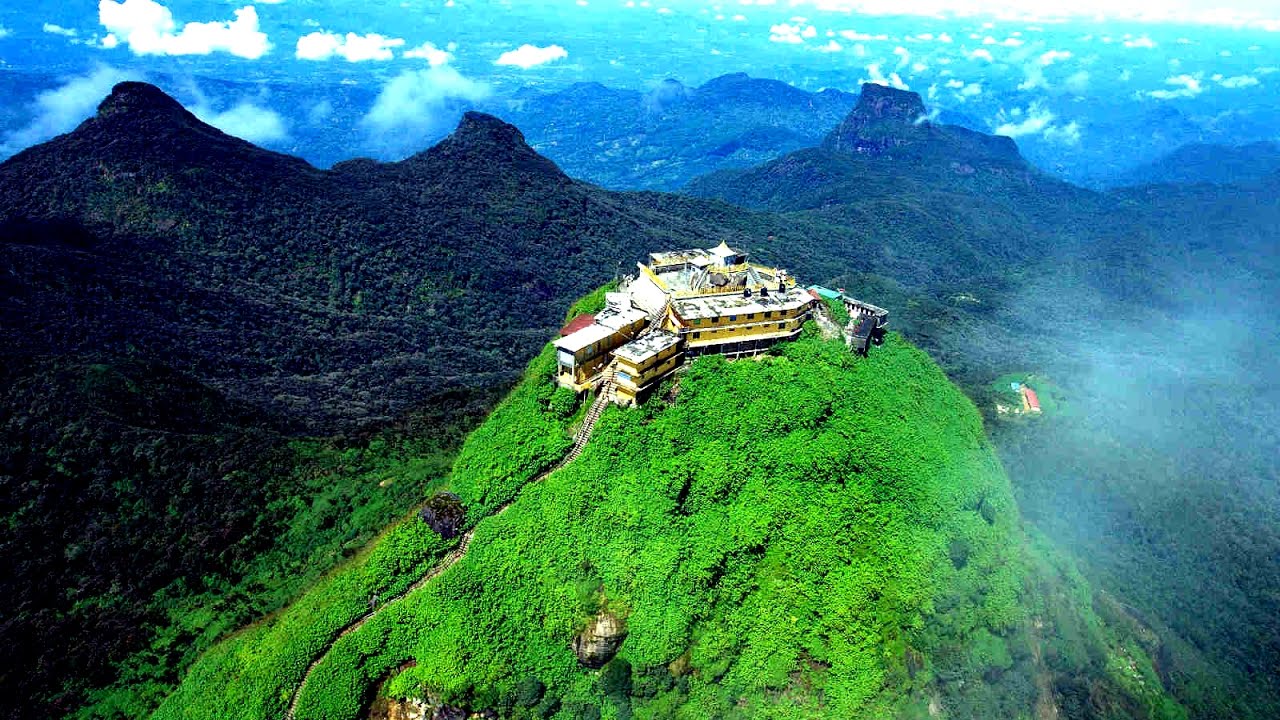
SRI PADA

* The sri pada mountain is 7,360 feet high.
*It is the fifth highest mountain in the country.
*It is bellived that the buddha has left his footprint on the rock at the top of this mountain.
*It can be reched through Hatton or through Rathnapura district.
*During December and April thousands of devotees climb the mountain to worship the foot print.

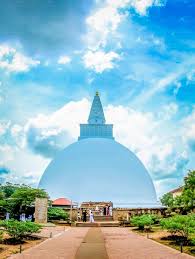
Mirisaweti Stupa


The Mirisaweti Stupa is a memorial building, a stupa, situated in the ancient city of Anuradhapura, Sri Lanka.King Dutugamunu built the Mirisaveti Stupa after defeating King Elara. After placing the Buddha's relics in the sceptre, he had gone to Tissa Wewa for a bath leaving the sceptre. After the bath, he returned to the place where the sceptre was placed, and it is said that it could not be moved. The stupa was built in the place where the sceptre stood. It is also said that he remembered that he partook in a chilly curry without offering it to the Sangha. In order to punish himself he built the Mirisavetiya Dagaba.


Sri Sumana Saman Devalaya


Maha Saman Devalaya or the Great Saman Temple is a shrine dedicated to deity Saman, situated at Ratnapura, Sri Lanka who is the presiding deity of the Sri Pada Mountain which is also called Samanthakuta meaning the mountain of Saman which is believed to have the left foot impression of Buddha which he kept in his visit to Sri Lanka. Saman Deviyo Considered as one of the guardian gods of Sri Lanka, Deity Saman is deeply venerated in the region of Rathnapura and related areas in the province of Sabaragamuwa of Sri Lanka, he is recorded to have been a district administrator of the region contemporary to Buddha who he met on the former's visit to Sri Lanka. According to the Mahavamsa the chronicle of ancient Sri Lanka, it is mentioned that the Administrator Saman, attained the first level of enlightenment Sotapanna at the end of the sermon of Buddha. After the demise of Saman, the administrator of Dewa he has started to be venerated as a God.
Thuparama Stupa


Thuparamaya is the earliest documented Buddhist temple in Sri Lanka. Its building dates to the arrival of Mahinda Thera and the introduction of Buddhism to the island. Located within the sacred precinct of Mahamewna park, the Thuparamaya Stupa is the earliest Dagoba to be constructed on the island, dating back to the reign of King Devanampiya TissaThe temple has been recognised by the Government and listed as a protected archaeological site in Sri Lanka. History Stone pillars around the Stupa suggest that a Vatadage with a conical roof once sheltered the Stupa at the center of the covered space Thuparamaya is closely linked to Mahinda Thera, the envoy sent by King Ashoka to Sri Lanka, bringing Theravada Buddhism and Chaitya worship to the island. At Mahinda's request, King Devanampiya Tissa built Thuparamaya to enshrine the right collar-bone of the Buddhathus the claim to be the first stupa built in Sri Lanka. It also marks the formal arrival of Buddhism.
Ruwanwalisaya


The Ruwanweli Maha Seya, also known as the Maha Thupa is a stupa in Anuradhapura, Sri Lanka. Two quarts or one Dona of the Buddha's relics are enshrined in the stupa, making it the largest collection of his relics anywhere.It was built by Sinhalese King Dutugemunu in c. 140 B.C., who became king of Sri Lanka after a war in which the Chola King Elāra was defeated. It is also known as Swarnamali Seya, Svaṇṇamāli Mahaceti and Rathnamali Seya. This is one of the "Solosmasthana" and the "Atamasthana". The stupa is one of the world's tallest ancient monuments, standing at 103 m (338 ft) and with a circumference of 290 m (951 ft). The original stupa had been about 55 m (180 ft) in height and was renovated by many kings.
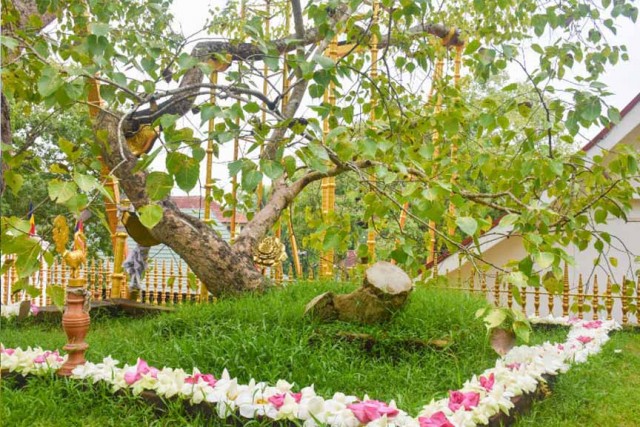
Jaya Sri Maha Bodhiya


Sri Maha Bodhi Viharaya is a Theravada Buddhist temple in Kandy, Sri Lanka. It is located in Bahirawakanda, approximately 2 km (1.2 mi) from the city centre. The temple is known for its giant Buddha statue. The statue of Buddha is depicted in the position of the Dhyana Mudra, the posture of meditation associated with his first Enlightenment, and can be seen from almost everywhere in Kandy. It stands at 26.83 m (88.0 ft) high and is one of the tallest Buddha statues in Sri Lanka.

The temple is built on land donated by the Minister of Lands, Hector Kobbekaduwa, to Ven. Ampitiye Dammarama Thero, a monk from the Amarapura Nikaya in the early 1970s. Initially Dammarama lived in a makeshift dwelling whilst soliciting funds for the construction of the temple. The temple was opposed by the senior monks of the Sri Dalada Maligawa (Temple of the Sacred Tooth Relic), claiming it would overshadow the centre of the Siyam Nikaya. In the 1980s a chief monk of the Amarapura Nikaya, Hinatiyana Dhammaloka, successfully petitioned President Ranasinghe Premadasa to intervene and legally grant the land to Dammarama.
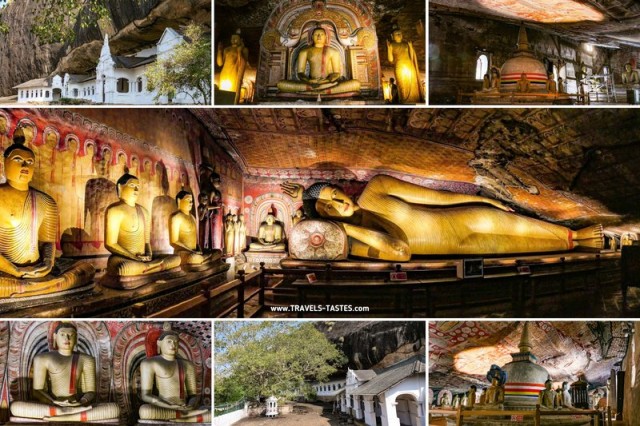
Rangiri Dambulla Temple


The caves of Dambulla Cave Temple, like in Mihintale caves, were occupied in very early times by Buddhist hermits. The antiquity of this place has been authenticated by the presence of pre-Christian inscriptions in Brahmi character immediately below the drip-ledge of the central cave.

The shape of the letters of all the short inscriptions in Brahmi form at Dambulla is distinctly those of the first century B. C

Dambulla cave temple became a popular place of residence of Buddhist monks at least from the reign of this king. Vattagamani Abhaya is one of the few kings of ancient Sri Lanka whose name and fame are not dependent on the written records. To him are credited by the common people of the country tile numerous caves with drip-ledges which were abodes of Buddhist monks in ancient days.

Kuragala


Kuragala is a pre-historic archaeological site consisting of an early human settlement during the late Pleistocene period and ruins of ancient Buddhist Cave temple complex, dating back to the 2nd century BC, in Balangoda, Sri Lanka. The temple complex is located on the Balangoda - Kaltota road approximately 24 km (15 mi) distance from the Balangoda town. The site has been formally recognised by the Government as an archaeological reserve in Sri Lanka. Kuragala is considered as the oldest archaeological site found in the Intermediate Zone.

History
Prehistoric evidences
According to the archaeological evidences found, Kuragala area had been used by humans belonging to the pre-historic period. From the excavations, archaeologists found stone tools, fossilized bone fragments and remains of a human skeleton which is believed to be aged more than 8,000 years. Investigations further revealed that the humans lived in Kuragala may had close links with the coastal areas as it found the remnants of seashells and shells of clams. Recent studies done in the Kuragala Kaltota Diyawinna area have revealed that beside the hunting, they had also engaged in agricultural activities as well.
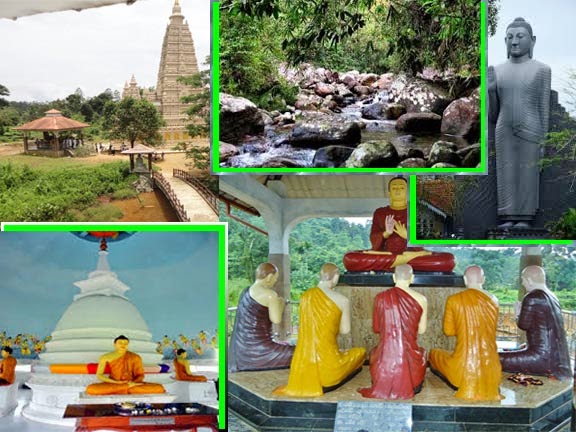
Rath ganga Temple


Lumbini where Prince Siddartha was born is situated in India, which was earlier known as Dambadiva. It was a little pastoral village nestling in this mountain frontier of Nepal in the 6th century BC.

Right throughout the year in Sri Lanka there is an exodus of pilgrims on pilgrimage to Dambadiva, where the hallowed sites connected with the life and times of Siddharta Gautama before and after His Supreme Enlightenment are found.

However Punchi Dambadiva (Little Dambadiva) is located along the Colombo - Ratnapura - Pelmadulla - Embilipitiya main highway - near Nonagama Junction off the 22nd km post from Ratnapura. From there lies its turn off along a mountain winding metalled narrow road running to about 12 km.

This Punchi Dambadiva reposes itself in the lap of the Sabaragamuwa Province, where in the hazy distance loom the holy mountain profiles of Sri Pada (Adam’s Peak), the holiest peak of all the peaks in our fair isle.
Temple of the Sacred Tooth Relic


Temple of the Sacred Tooth Relic (Sri Dalada Maligawa) is one of the most sacred Buddhist sites in Sri Lanka. It is located in the historic city of Kandy and houses the Sacred Tooth Relic of Lord Buddha. Because of its religious, historical, and cultural significance, it is considered one of the most important heritage sites in the country. The temple is also part of the Sacred City of Kandy, which has been recognized by UNESCO as a World Heritage Site.

History of the Temple of the Sacred Tooth Relic

According to historical records, the Sacred Tooth Relic was brought to Sri Lanka from India by Princess Hemamala and her husband Prince Dantha. They secretly carried the relic to Sri Lanka and presented it to King Kithsirimevan, the ruler of the Anuradhapura Kingdom.

As the capital cities of the country changed over time, the Sacred Tooth Relic was also moved to different locations for protection. Eventually, King Vimaladharmasuriya I built a temple in Kandy to house the relic. From that time onward, the temple has remained the most important religious site for Buddhists in Sri Lanka.

Ancient Artifacts Found in the Temple

The Temple of the Sacred Tooth Relic contains many ancient and valuable artifacts that reflect the rich cultural and religious heritage of Sri Lanka.

Golden Relic Caskets – The Sacred Tooth Relic is preserved inside a series of beautifully crafted golden caskets decorated with intricate designs.

Ancient Wall Paintings – The walls of the temple display paintings illustrating the history of the Sacred Tooth Relic, royal patronage, and important Buddhist stories.

Royal Artifacts and Decorative Items – Several royal ceremonial objects, ornaments, and traditional artifacts from the Kandyan period are preserved within the temple premises.

Ancient Manuscripts and Palm-Leaf Texts – Historical Buddhist texts and manuscripts written on palm leaves are also safeguarded in the temple complex.

Archaeological Significance

The Temple of the Sacred Tooth Relic is also highly significant from an archaeological perspective. Its architecture, artistic carvings, and interior design reflect the architectural traditions of Sri Lanka during the Kandyan Kingdom.

Kandyan Architectural Style – The wooden carvings, tiled roofs, and door and window designs represent the traditional Kandyan style of architecture.

Historical Artifacts and Records – The preserved objects and historical records provide valuable information about the social, cultural, and religious life of ancient Sri Lanka.

Continuous Religious Use – Unlike many ancient monuments, the temple has been continuously used as a place of worship from ancient times to the present day, making it a unique site that connects history with living culture.

Cultural Importance

The temple stands as the spiritual and cultural heart of Sri Lankan Buddhism. Every year, the famous Kandy Esala Perahera festival is held in honor of the Sacred Tooth Relic. This grand cultural procession attracts thousands of devotees and visitors from around the world.


| About me | My village | My country | Buddhist religious cities in sri lanka | Articles | My Queen | My hero | My favourite movie | My favourite country | 𝐋𝐮𝐥𝐮 𝐓𝐞𝐚𝐜𝐡𝐞𝐫 |

D.M.Chanchana sarangi from rambuka - Buddhist religious cities in sri lanka (Daily life - Education)    -    Author : chanchana sarangi - Sri Lanka


1989 visitors since 2025-03-08
Last update : 2026-03-14

Blog-City.info >> Daily life >> Blog #33966

Create your own
WEBSITE !
PICTURES OF FRANCE


Visit France !

website author area
Password :
Forgot password? - unpublish